

Quick Summary
- Most corporate websites in Washington DC convert less than two percent of visitors because of form friction, vague copy, and poor mobile architecture.
- Increasing paid advertising budgets without fixing conversion bottlenecks burns marketing capital and inflates customer acquisition costs.
- Professional conversion rate optimization in Washington DC applies quantitative analytics, user behavioral heatmaps, and systematic A/B split testing.
- Daniel Iloh Limited builds direct-response conversion engines that double inbound pipeline value from existing web traffic.
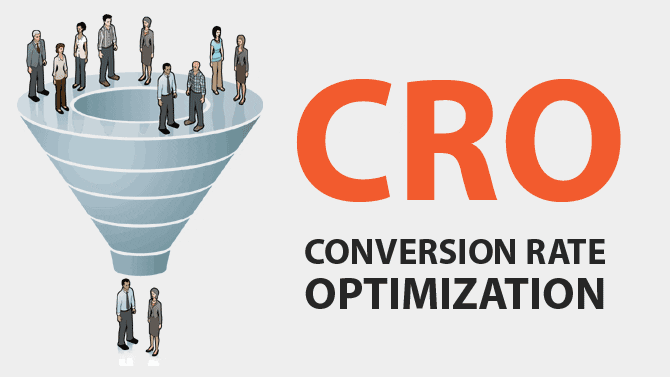
Implementing scientific conversion rate optimization in Washington DC has become the most profitable growth lever for high-traffic corporate law firms, B2B software vendors, government contracting consultancies, and private medical networks across the capital region. Organizations in the District invest millions of dollars annually into digital advertising, search engine optimization, and public relations campaigns designed to drive senior executives, institutional buyers, and affluent consumers to their digital properties.
However, the vast majority of these corporate websites suffer from a catastrophic structural deficiency: they leak qualified prospective clients at every stage of the user journey. The typical corporate website converts between one and two percent of its total visitors into verified inquiries. That means for every one hundred qualified executives who land on the page, ninety-eight leave without submitting an inquiry, downloading a capability statement, or booking a consultation. Pouring additional advertising capital into an inefficient, leaking website simply accelerates budget waste while doing nothing to solve the root issue.
At Daniel Iloh Limited, we replace guesswork with empirical data and direct-response behavioral science. In this comprehensive strategic guide, we examine how ambitious enterprises leverage scientific conversion rate optimization in Washington DC to double their monthly inbound lead volume, shorten consultative sales cycles, and maximize client lifetime value without spending an additional dollar on traffic.
Table of Contents
- The Leaky Bucket Dilemma: Why DC Enterprises Waste Millions on Unconverted Traffic
- The Redesign Trap: Why Cosmetic Website Updates Rarely Improve Lead Volume
- 1. Quantitative Data Auditing: GA4 Event Tracking and Drop-Off Diagnosis
- 2. Qualitative User Behavior Analysis: Session Replays, Scroll Maps, and Heatmaps
- 3. Form Field Friction Elimination and Multi-Step Progressive Intake Portals
- 4. Above-the-Fold Direct-Response Copywriting and Value Proposition Clarity
- 5. Scientific A/B Split Testing Protocols and Statistical Significance
- 6. Mobile Experience Streamlining, Core Web Vitals, and Post-Click Velocity
- The Daniel Iloh Limited 90-Day CRO Optimization Blueprint
- Frequently Asked Questions
The Leaky Bucket Dilemma: Why DC Enterprises Waste Millions on Unconverted Traffic
The digital advertising market in Washington D.C. is among the most expensive in the world. Commercial and transactional search keywords for legal retainers, IT consulting, defense contracting, and healthcare frequently cost between $25.00 and $75.00 per click on Google Ads. When a company pays $50.00 for a single visitor, every bounce represents a tangible financial loss.
Consider the stark mathematical reality: a B2B consultancy receiving 10,000 monthly website visitors at a 1.5% conversion rate generates 150 leads. If that firm doubles its conversion rate to 3.0% through systematic optimization, it generates 300 qualified leads from the exact same traffic volume. Achieving that same increase by purchasing more ad clicks would require doubling the advertising budget, adding tens of thousands of dollars in monthly overhead.
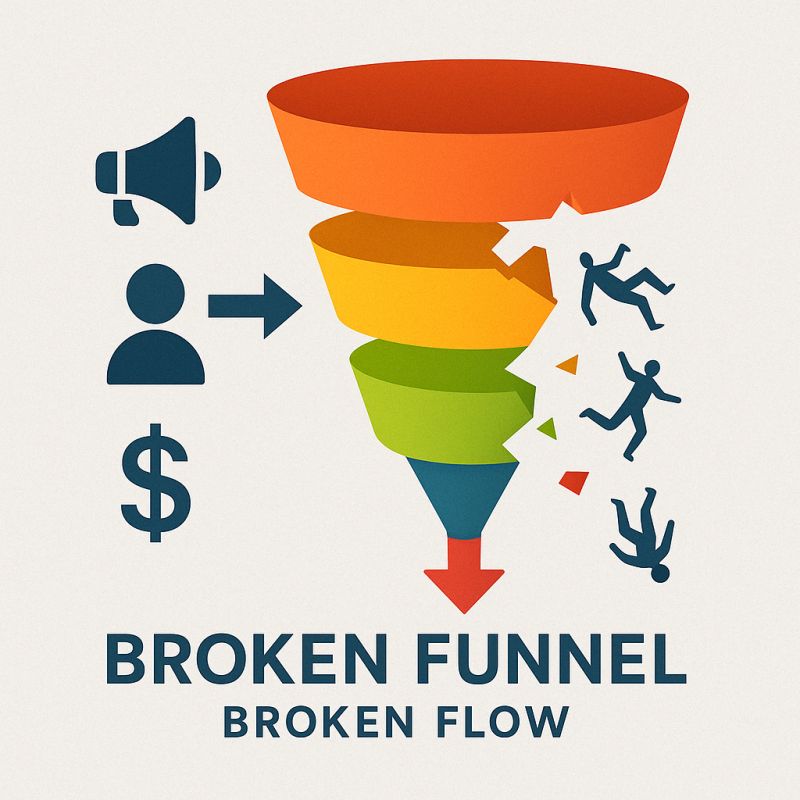
According to digital marketing benchmarks published by the U.S. Small Business Administration, enterprises that systematically test and optimize their digital conversion funnels generate an average ROI of over two hundred percent on CRO investments within the first six months. Conversion optimization is not merely a website enhancement; it is the fundamental multiplier of all marketing capital.
The Redesign Trap: Why Cosmetic Website Updates Rarely Improve Lead Volume
When corporate leadership notices declining lead generation, their default reaction is often to commission an expensive complete website redesign. They hire a creative branding agency that spends six months building visually striking animations, minimalist layouts, and abstract video backgrounds.
When the new website launches, lead volume often drops even further. Why? Because graphic design agencies design websites based on visual aesthetics rather than direct-response behavioral psychology. In the pursuit of “clean design,” they bury primary value propositions, hide call-to-action buttons beneath confusing hamburger menus, and replace persuasive sales copy with vague corporate jargon like “Empowering Synergistic Solutions for Tomorrow’s Leaders.”
Discerning corporate buyers and busy executives do not award retainers to websites that look like modern art museums. They convert when a website instantly answers three fundamental questions within five seconds: What specific problem do you solve? Why are you uniquely qualified to solve it? And what exact step should I take next?
1. Quantitative Data Auditing: GA4 Event Tracking and Drop-Off Diagnosis
Effective conversion rate optimization in Washington DC begins with rigorous, quantitative measurement. Many corporate marketing teams operate with broken or incomplete analytics, tracking only superficial pageviews while remaining blind to exact micro-conversion drop-offs.
We engineer comprehensive Google Analytics 4 (GA4) and Google Tag Manager (GTM) event tracking architectures:
Funnel Stage Tracking: Measuring the precise drop-off percentage between viewing a landing page, clicking the consultation button, entering the intake form, and completing submission.
Scroll Depth and Interaction Benchmarks: Tracking how far executive prospects scroll down cornerstone capability pages and which content sections capture the highest engagement.
Device and Source Discrepancy Audits: Identifying hidden conversion bottlenecks across mobile devices versus desktop browsers, or paid traffic versus organic search visitors.
2. Qualitative User Behavior Analysis: Session Replays, Scroll Maps, and Heatmaps
While quantitative analytics reveal where users leave your website, qualitative behavioral analysis explains why they leave. To uncover the true psychological friction on your pages, we deploy non-invasive session recording and heatmap intelligence tools such as Hotjar and Microsoft Clarity.
We analyze hundreds of anonymous visitor recordings, observing real users interacting with your pages in real time. We identify “rage clicks” where visitors repeatedly click broken links, locate dead areas where users get confused by unintuitive navigation, and track where attention drops off on long-form content.
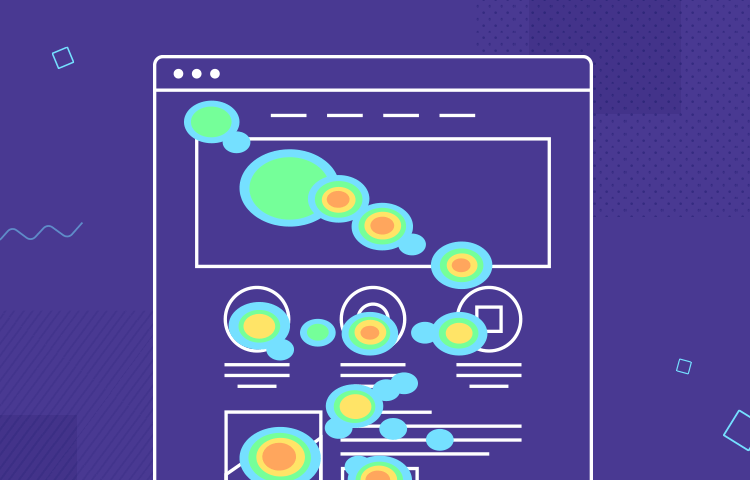
This qualitative intelligence reveals the hidden friction points that data dashboards cannot explain, providing concrete hypotheses for high-impact testing.
3. Form Field Friction Elimination and Multi-Step Progressive Intake Portals
The intake form is where the vast majority of website conversions succeed or fail. Presenting a prospective corporate client with a monolithic form containing twelve required fields—asking for phone numbers, company size, physical address, and detailed project budgets all at once—creates immense cognitive friction and anxiety.
We replace overwhelming single-page forms with progressive, multi-step intake funnels using our proprietary Brand-It Sales Funnel System. By breaking the intake process into intuitive, bite-sized steps—starting with low-friction diagnostic questions before requesting contact details—we reduce perceived effort and eliminate psychological resistance.
Our multi-step conversion architectures incorporate progress bars, micro-commitments, and conditional logic that tailors subsequent questions based on the prospect’s prior answers, increasing form completion rates by fifty to eighty percent.
4. Above-the-Fold Direct-Response Copywriting and Value Proposition Clarity
The first screen of your website—the area visible before the user scrolls down—determines whether an executive stays or bounces. If your hero section features an auto-playing video slider and an ambiguous tagline, prospective clients will hit the back button within three seconds.
Through our authoritative Content Management Frameworks, we rewrite above-the-fold content using time-tested direct-response principles. We construct crystal-clear value propositions consisting of a benefit-driven headline, a reassuring sub-headline explaining the exact mechanism, bulleted credibility markers (such as years in business or specific regulatory certifications), and a prominent, high-contrast call-to-action button.
By providing immediate clarity and demonstrating relevant authority instantly, we capture executive attention and compel visitors to continue exploring your capabilities.
5. Scientific A/B Split Testing Protocols and Statistical Significance
Never rely on subjective opinion when empirical testing can provide definitive answers. In scientific conversion rate optimization, every major change is deployed as a controlled A/B split test.
We test one core variable at a time against the existing control page: testing high-intent headlines against current copy, evaluating single-column layouts versus multi-column designs, and testing direct calendar booking against downloadable capability white papers.

We run tests until they reach at least ninety-five percent statistical confidence, ensuring that observed conversion gains are mathematically valid and not the result of random traffic variance. Winning variations become the new baseline, establishing an ongoing cycle of compounding conversion growth.
6. Mobile Experience Streamlining, Core Web Vitals, and Post-Click Velocity
Even in high-ticket B2B sectors, over fifty percent of preliminary search research occurs on mobile smartphones during executive commutes or between meetings. If your website takes more than 2.5 seconds to load on mobile, conversion rates plunge precipitously.
We engineer extreme post-click velocity: compressing unoptimized media assets, eliminating render-blocking scripts, and optimizing server response times to achieve flawless Google Core Web Vitals scores. Furthermore, we design thumb-friendly mobile navigation with sticky call-to-action buttons that remain accessible regardless of scroll position.
Once a conversion occurs, our automated Email-It Speed-to-Lead Workflows trigger immediate multi-channel response sequences within sixty seconds, ensuring that the prospect’s high intent is immediately converted into a confirmed discovery consultation.
The Daniel Iloh Limited 90-Day Scaling Blueprint
At Daniel Iloh Limited, we install our proven 90-Day Customer Acquisition System to help commercial enterprises build sustainable customer acquisition engines:
How We Deploy Your Conversion Rate Optimization Engine:
- Month 1: Install GA4 event tracking, deploy session replay software, conduct comprehensive UX audits, and identify core drop-off friction points via Brand-It.
- Month 2: Author and launch high-impact direct-response headlines via Content Management, redesign multi-step intake forms, and initiate controlled A/B split tests.
- Month 3: Achieve statistical significance on initial test batches, implement winning variations as the permanent baseline, and connect automated 60-second lead engagement via Email-It.
Frequently Asked Questions
What is conversion rate optimization and why is it vital for Washington DC firms?
Conversion rate optimization (CRO) is the scientific process of increasing the percentage of website visitors who take a specific desired action. In high-cost DC advertising markets, CRO doubles lead volume without requiring additional ad spend.
How does CRO differ from an aesthetic website redesign?
A cosmetic redesign focuses on visual appearance and often inadvertently damages lead volume. CRO uses empirical data, user session recordings, and A/B split testing to optimize psychological conversion triggers and eliminate form friction.
How long does it take to achieve statistically significant CRO results?
Depending on website traffic volume, most high-traffic corporate websites reach statistical significance on initial A/B test variations within thirty to sixty days, delivering immediate lead gains.
How does Daniel Iloh Limited connect CRO to higher business revenue?
We combine friction-free Brand-It intake funnels, persuasive direct-response copy via Content Management, and automated 60-second Email-It response sequences to ensure website leads convert into paying clients.