

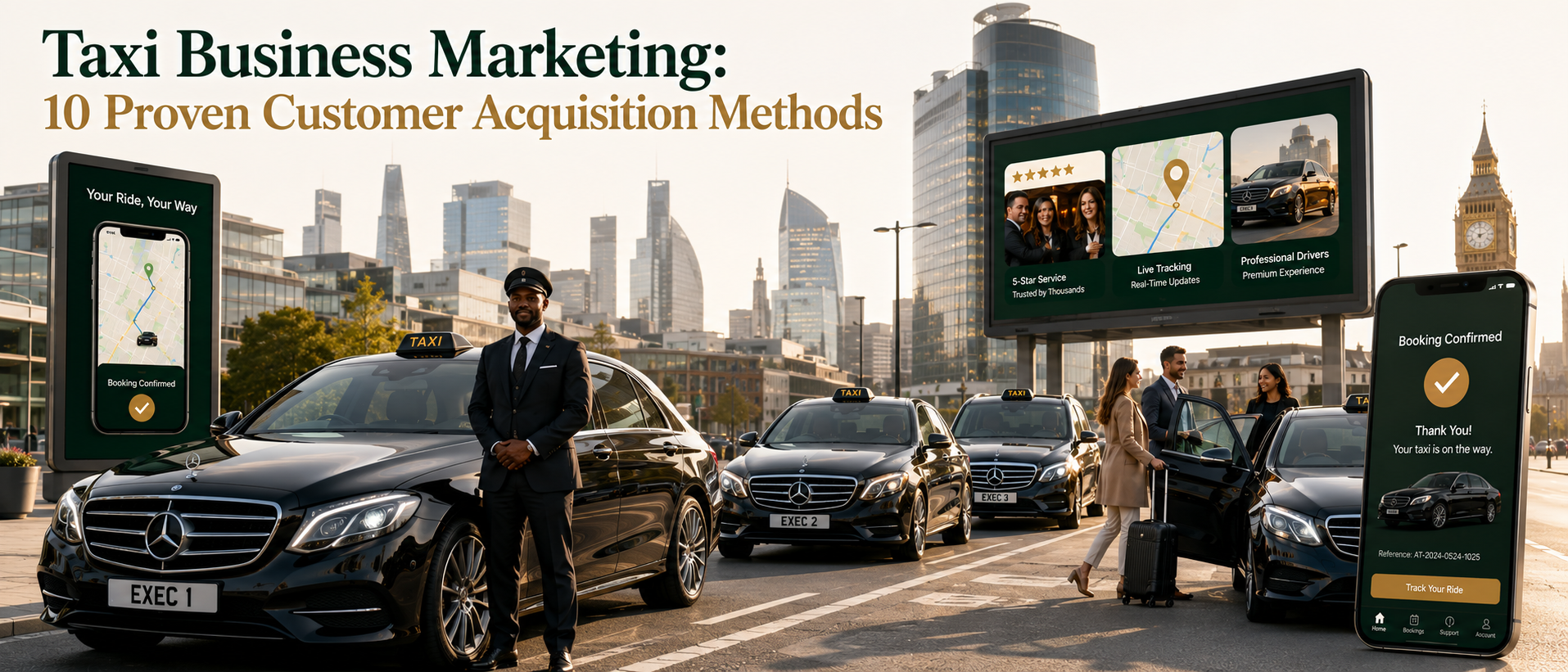
TAXI BUSINESS MARKETING: 10 PROVEN CUSTOMER ACQUISITION METHODS (2026 GUIDE). Taxi businesses operate in a market where demand is steady but competition is constant. People need rides every day for work, airport transfers, events, emergencies, and general movement. Yet having demand does not automatically translate into bookings.
The real challenge is visibility and trust. Customers are usually choosing between multiple options within seconds, and the decision often comes down to who shows up first, who looks more reliable, and who makes booking feel effortless.
This is why many taxi operators struggle even when they have cars on the road. They depend heavily on referrals or random calls instead of structured customer acquisition systems. That creates unstable income and unpredictable demand cycles.
At the core of modern transport marketing is one idea: customers don’t just choose taxis, they choose systems they can trust. That includes Google visibility, reviews, booking speed, pricing clarity, and consistent follow-up.
At Daniel Iloh Limited, we work with service-based businesses to build structured acquisition systems that generate predictable bookings through SEO, paid ads, funnels, and automation. Book a consultation session here.
The goal is simple: remove guesswork from customer acquisition.
This guide breaks down 10 proven and practical customer acquisition methods for taxi businesses, with deeper insight into how each one actually drives bookings in competitive local markets.
-
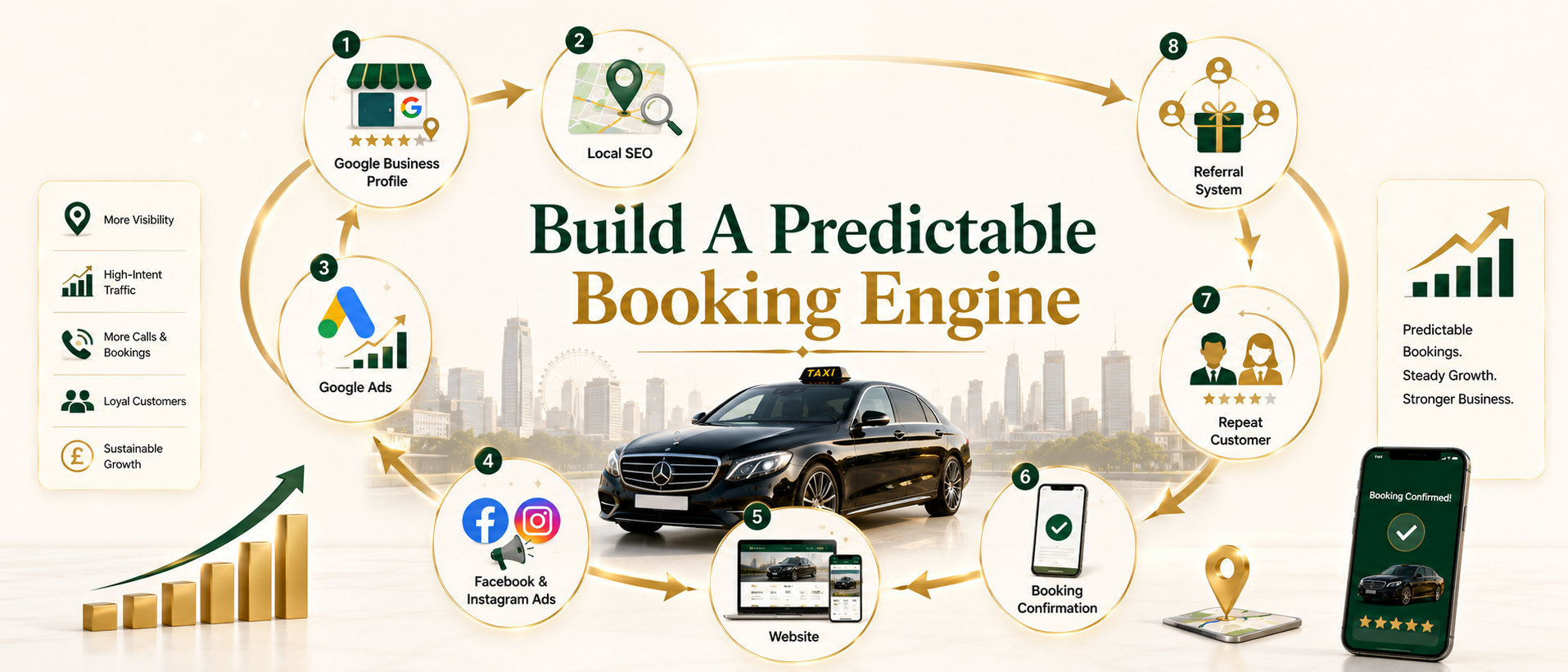
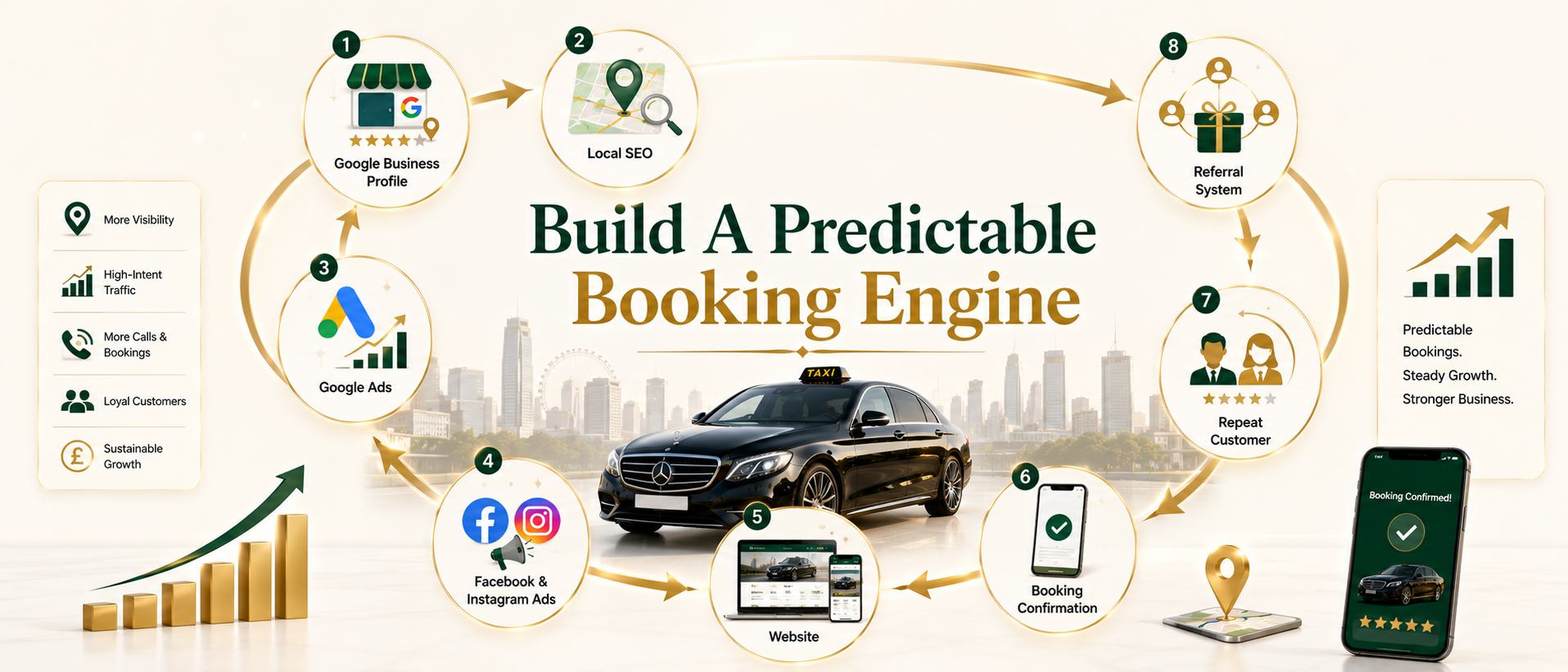
GOOGLE BUSINESS PROFILE OPTIMISATION
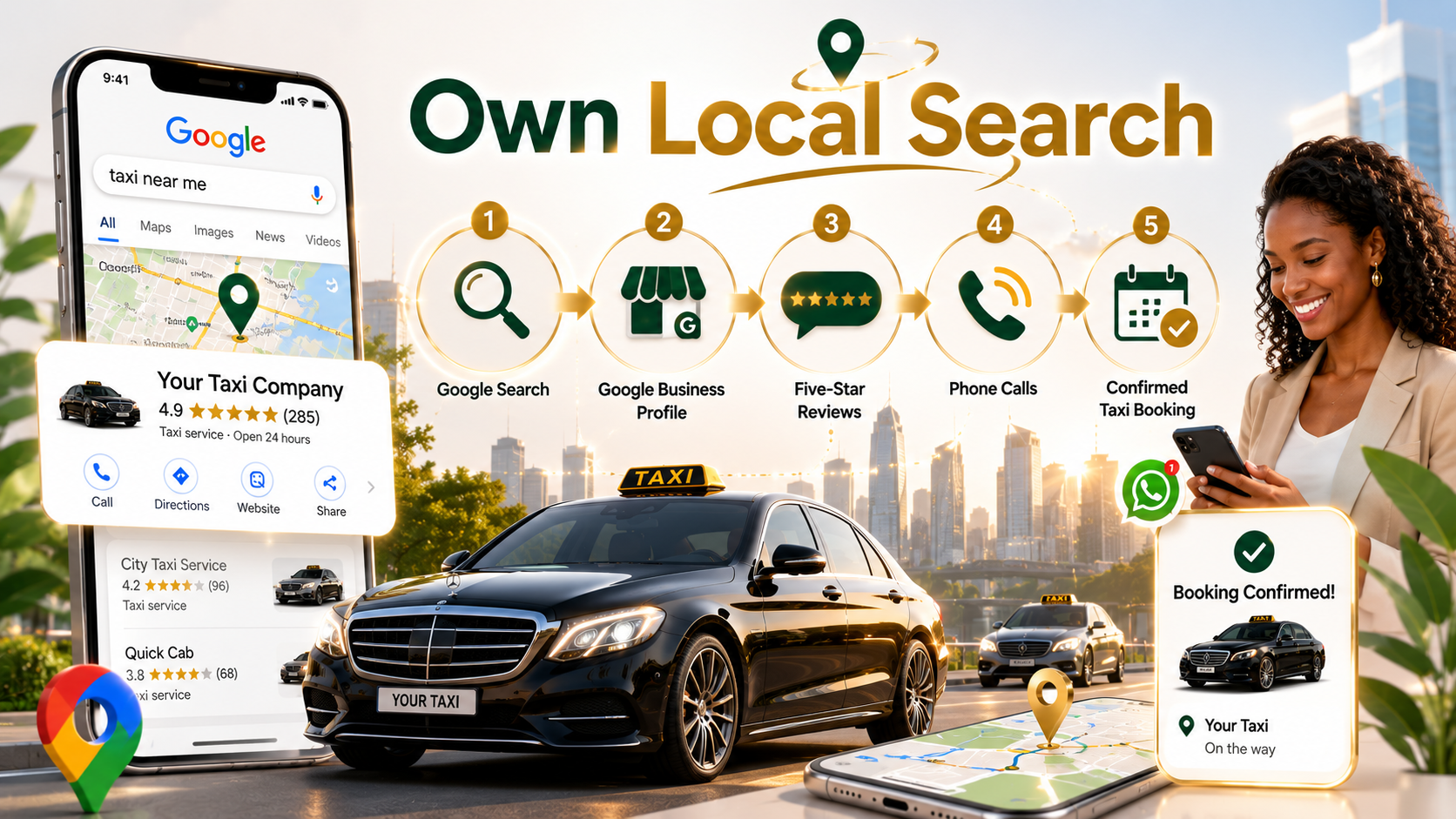
For most taxi businesses, Google Business Profile is the first digital touchpoint. When someone searches “taxi near me,” “airport transfer UK,” or “affordable cab service nearby,” Google Maps results often decide who gets the booking.
An optimised profile improves local ranking, click-through rate, and call volume. The basics matter, but execution matters more.
This includes accurate business categories, updated service areas, consistent opening hours, high-quality vehicle images, and regular posts. Reviews are especially important. A taxi business with 4.6 stars and 200 reviews will consistently outperform one with fewer but cheaper services.
Google’s local ranking system heavily depends on relevance, distance, and prominence. Moz has consistently highlighted reviews, citations, and profile completeness as key ranking signals in local SEO performance.
In practice, this means your Google Business Profile is not a “setup once and forget” asset. It is a live acquisition channel that needs continuous optimization.
-
LOCAL SEO TARGETING FOR TAXI SERVICES
Local SEO is the long-term foundation of taxi business marketing. Unlike ads, it compounds over time.
When properly executed, your website appears for searches like “taxi service in Manchester,” “airport transfer UK,” or “24/7 cab near me.”
This is driven by structured location pages, keyword optimization, and consistent business citations across directories. Each location page should focus on a specific area, service type, and booking intent.
For example, airport transfer pages tend to convert higher because they target urgent, high-value intent searches.
Local SEO also depends on authority signals such as backlinks from local directories, travel blogs, and hotel websites. The stronger your local relevance, the higher your visibility.
-
GOOGLE ADS FOR HIGH-INTENT BOOKINGS
Google Ads is one of the fastest ways to generate taxi bookings, especially for urgent services.
Unlike SEO, which builds over time, search ads place your business directly in front of users actively searching for immediate solutions.
This is particularly powerful for airport transfers, corporate rides, emergency trips, and executive taxi services. These users are not browsing; they are ready to book.
The key is structuring campaigns around intent-based keywords rather than broad terms. For example, “Heathrow Airport taxi booking” converts far better than “affordable taxi.”
Landing pages must also match ad intent. If someone clicks an ad for airport transfer, they should land on a page that clearly shows pricing, booking form, vehicle options, and trust signals.
Without this alignment, ad spend is wasted regardless of traffic volume.
-
FACEBOOK AND INSTAGRAM ADVERTISING
Social media ads work differently from search ads. Instead of capturing demand, they create demand.
For taxi businesses, platforms like Facebook and Instagram allow behavioural targeting based on travel interest, location, profession, and lifestyle patterns.
This is useful for reaching corporate professionals, frequent travellers, and event-based customers who may not be actively searching but will need transport soon.
Creative quality matters more than targeting. Ads showing clean vehicles, clear pricing, and simple booking instructions consistently outperform generic promotional posts.
Short video content also performs well because it builds trust faster than static images.
-
STRUCTURED REFERRAL SYSTEMS
Referrals remain one of the strongest acquisition channels in transport businesses, but most operators use them informally.
A structured referral system introduces incentives such as ride discounts, cashback, or loyalty points.
For example, a customer who refers three new riders receives a free airport trip or discounted booking. This turns passive word-of-mouth into a measurable acquisition channel.
Referral systems work best when combined with tracking tools so you can measure which customers bring the most value.
-
CORPORATE AND HOTEL PARTNERSHIPS
One of the most stable revenue channels in taxi business marketing is partnership-driven bookings.
Hotels, event organisers, travel agencies, and corporate offices generate consistent daily demand.
Hotels especially are valuable because guests frequently need airport transfers, local transport, and business rides.
To make this work, taxi businesses need structured proposals, reliable dispatch systems, and consistent service quality. Partnerships are built on trust, not discounts alone.
Over time, these relationships create predictable income that is less dependent on ads or search rankings.
-
WEBSITE CONVERSION SYSTEMS
A taxi website is not just a digital brochure. It is a booking engine.
Many taxi websites fail because they focus on information instead of conversion. A strong taxi website should guide users toward action within seconds.
Key elements include clear service breakdowns, visible booking buttons, WhatsApp integration, pricing transparency, and trust signals such as reviews and fleet images.
Reducing friction is critical. If a user has to search for booking information, you are already losing conversions.
Simple booking flows consistently outperform complex systems.
-
RETARGETING CAMPAIGNS
Most potential customers do not book on their first visit. This is especially true for higher-value services like airport transfers or executive rides.
Retargeting campaigns allow you to reconnect with users who visited your website or engaged with your ads but did not complete a booking.
This can be done through Google Display Ads, Facebook retargeting, or Instagram remarketing.
The goal is not to aggressively sell but to remind users of availability, reliability, and ease of booking.
Retargeting often delivers higher ROI than cold advertising because it focuses on warm audiences.
-
EMAIL AND SMS MARKETING FOR RETENTION
Customer acquisition is important, but retention determines profitability.
Many taxi businesses focus heavily on new customers while ignoring repeat users who already trust their service.
Email and SMS marketing help maintain ongoing communication with past customers. This includes ride reminders, discount offers, airport travel updates, and loyalty rewards.
Harvard Business Review notes that retaining existing customers is significantly more cost-effective than acquiring new ones, often by a wide margin.
For taxi businesses, this means repeat bookings are not accidental. They are engineered through consistent follow-up systems.
Automation tools such as DIL Email Automation can help maintain this communication without manual effort.
-
FULL FUNNEL INTEGRATION FOR TAXI BUSINESSES
The most successful taxi businesses do not rely on isolated strategies. They operate systems. A full funnel structure connects every stage of customer acquisition:
- Visibility through Google Business Profile and SEO
- Acquisition through ads and partnerships
- Conversion through landing pages and booking systems
- Retention through email, SMS, and loyalty programs
When these systems are disconnected, marketing becomes unpredictable. When they are integrated, bookings become stable and scalable.
Tools like DIL Sales Funnel and Funnel-It help transport businesses connect these layers into a structured growth system that consistently generates leads and converts them into paying customers.
WHY THESE CUSTOMER ACQUISITION METHODS CONSISTENTLY WORK
These customer acquisition methods are not random marketing ideas, they reflect how real customers behave when they need taxi services.
Most riders follow a predictable decision path. They either search on Google when the need is urgent, respond to ads when demand is triggered, or book based on trust built over time through referrals and past experience. Every method in this guide aligns with one of those behaviours.
For example, SEO and Google Business Profile focus on high-intent searches. Google Ads targets immediate booking intent. Social media advertising builds awareness before the need becomes urgent. Partnerships and referrals work through trust transfer from existing relationships.
The strength of this system is alignment with behaviour, not guesswork. It works because it fits how people already make decisions, especially under time pressure.
In practical terms, this means these methods are not dependent on trends or algorithm changes alone. They are built around search intent, visibility, and decision psychology, which remain stable over time.
THE ROLE OF TRUST IN TAXI CUSTOMER ACQUISITION
Trust is one of the most important factors in taxi booking decisions. In most cases, customers are not just comparing prices. They are comparing reliability, safety, and how easy it feels to complete a booking.
A taxi business builds trust through repeated exposure and consistency. When a business appears on Google Maps, shows strong reviews, maintains an active website, and responds quickly on WhatsApp or phone calls, it automatically feels more credible.
This is why combining multiple channels matters. A customer might first see a Facebook ad, later search the business on Google, then check reviews before finally booking. Each step reduces hesitation and increases confidence.
Research in customer behaviour consistently shows that trust reduces decision friction and improves conversion rates in service industries. When trust is high, customers book faster and are more likely to return.
In the taxi industry, trust is not a branding concept. It directly affects daily revenue.
Beyond traffic and visibility, pricing perception plays a major role in taxi bookings. Customers are not always choosing the cheapest option; they are choosing the option that feels safe, predictable, and professional.
Clear pricing pages reduce hesitation, hidden charges increase drop-offs. Similarly, visible reviews, driver professionalism, and response speed directly influence conversion rates.
Another overlooked factor is response time on WhatsApp or phone calls. In many African markets, especially the UK, the fastest responder often wins the booking even if they are not the cheapest. This means operational efficiency is part of marketing performance.
WHY MOST TAXI BUSINESSES FAIL DESPITE HIGH DEMAND
Taxi services are always in demand, but many businesses still struggle to grow. The issue is not demand. It is structure.
A large number of taxi operators depend almost entirely on referrals or inconsistent walk-in calls. Others run ads without a proper landing page or have a website that does not convert visitors into bookings. In many cases, marketing channels exist but are not connected.
This creates fragmentation. Each channel works in isolation instead of feeding into a single system. As a result, traffic is wasted, leads are lost, and customer follow-up does not happen.
Another major gap is lack of retention strategy. Most businesses focus only on getting new customers while ignoring past customers who are easier and cheaper to convert again.
When you compare this to businesses that use structured systems combining SEO, ads, retargeting, partnerships, and automated follow-up, the difference is clear. One approach is reactive and inconsistent. The other is designed for predictable growth.
This is why structure matters more than effort in taxi business marketing. Consistency comes from systems, not activity.
To conclude this article, it is important to note that taxi business growth is no longer driven by isolated tactics. It depends on how well visibility, trust, acquisition, conversion, and retention are connected into one system.
Businesses that combine SEO, paid ads, partnerships, structured referrals, and retention systems consistently outperform those relying on referrals or word-of-mouth alone.
The transport industry is becoming more digital and more competitive. Customers now make decisions within seconds based on search results, reviews, and booking convenience.
Daniel Iloh Limited helps taxi and transport businesses build structured customer acquisition systems that generate predictable bookings and stable revenue through SEO, paid ads, funnels, and automation.
Take the next 30s to book a call with Daniel Iloh Limited.
The businesses that win are not necessarily the biggest. They are the ones with the most organized systems.