

In an era where consumers trust real people over polished adverts, influencer marketing for fashion has become one of the most powerful tools available to clothing brands, particularly for African fashion businesses building visibility in competitive markets like the UK.
Think about the last time you bought a piece of clothing because you saw someone wear it online and immediately wanted it. That is influencer marketing doing what it does best. It creates desire through authentic human connection, something no traditional billboard or magazine ad can fully replicate.
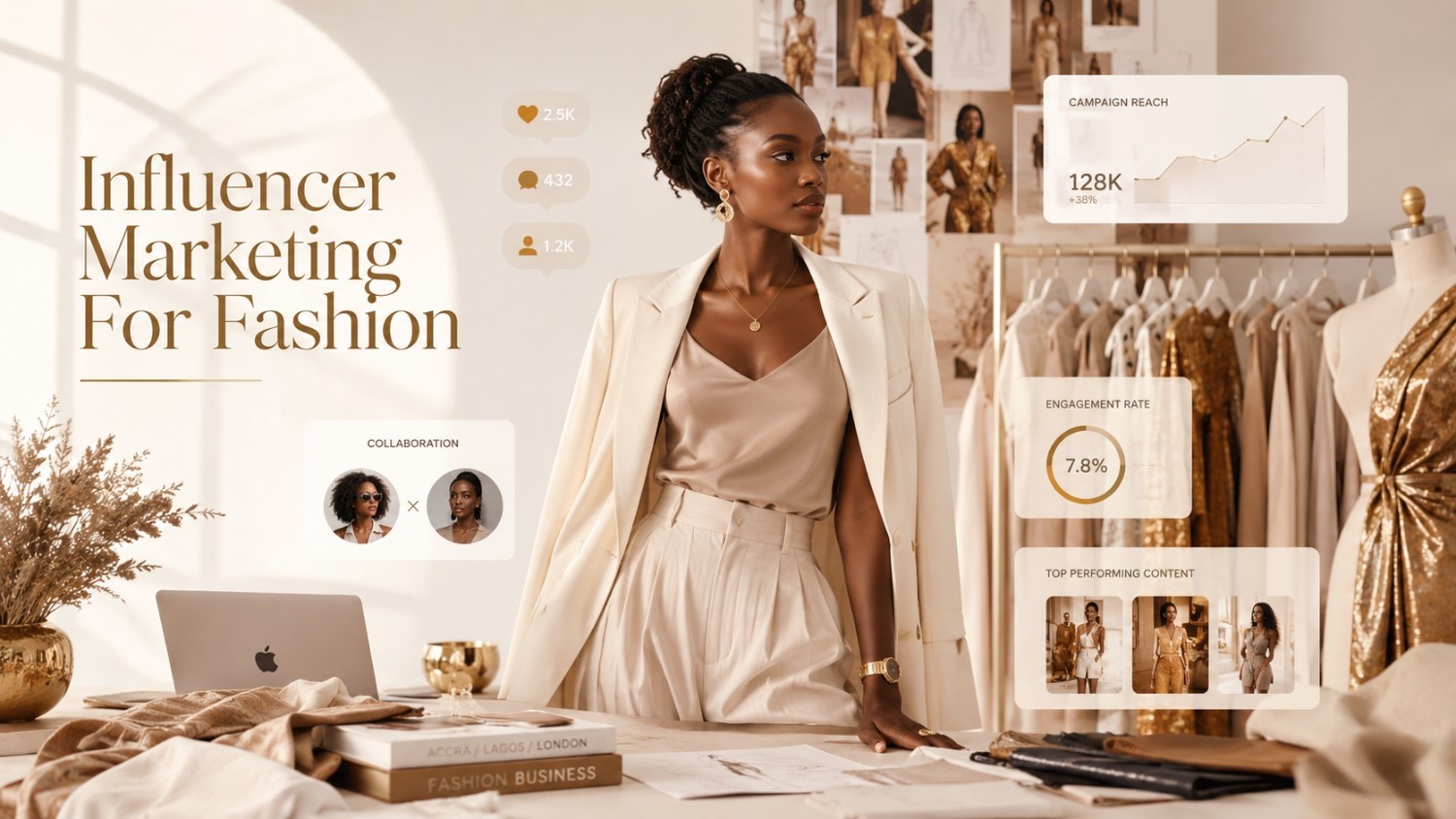
For African fashion brands targeting diaspora communities, lifestyle audiences, or mainstream UK consumers, working with the right influencers can open doors that paid advertising alone cannot. But influencer marketing for fashion only delivers real results when it is approached with strategy, structure, and the right expectations.
This guide breaks down everything you need to know from identifying the right creators to tracking your return on investment and building partnerships that last. Daniel Iloh Limited has helped numerous African business owners scale through structured marketing systems, and influencer strategy is an important piece of that picture.
Want a done-for-you customer acquisition system built around your fashion brand? Talk to Daniel Iloh Limited today. Book a Free Session
WHAT IS INFLUENCER MARKETING FOR FASHION AND WHY DOES IT WORK?
Influencer marketing for fashion involves partnering with individuals who have established audiences on platforms like Instagram, TikTok, YouTube, or Pinterest to promote your clothing, accessories, or fashion brand.
It works for three core psychological reasons:
-
Social Proof
When a real person with a genuine following wears your brand and talks about it authentically, their audience sees it as a trusted recommendation – not an advertisement. Research consistently shows that people are far more likely to purchase a product they see a peer or influencer use, compared to one they see in a traditional ad.
-
Aspirational Identity
Fashion is deeply tied to identity. When followers admire an influencer’s style and lifestyle, wearing the same brand becomes a way of expressing or aspiring to that identity. This emotional connection is extraordinarily powerful for fashion businesses.
-
Targeted Reach
Unlike broad advertising campaigns, influencer marketing for fashion allows you to reach highly specific audience segments. A UK-based lifestyle influencer who covers African culture and fashion reaches exactly the customer profile an Ankara brand in London needs.
According to HubSpot’s State of Marketing Report, 89% of marketers say influencer marketing delivers ROI equal to or better than other marketing channels.
THE INFLUENCER LANDSCAPE: UNDERSTANDING THE DIFFERENT TIERS
Not all influencers are created equal, and for most African fashion brands, bigger is not always better. Understanding the tiers helps you invest wisely.
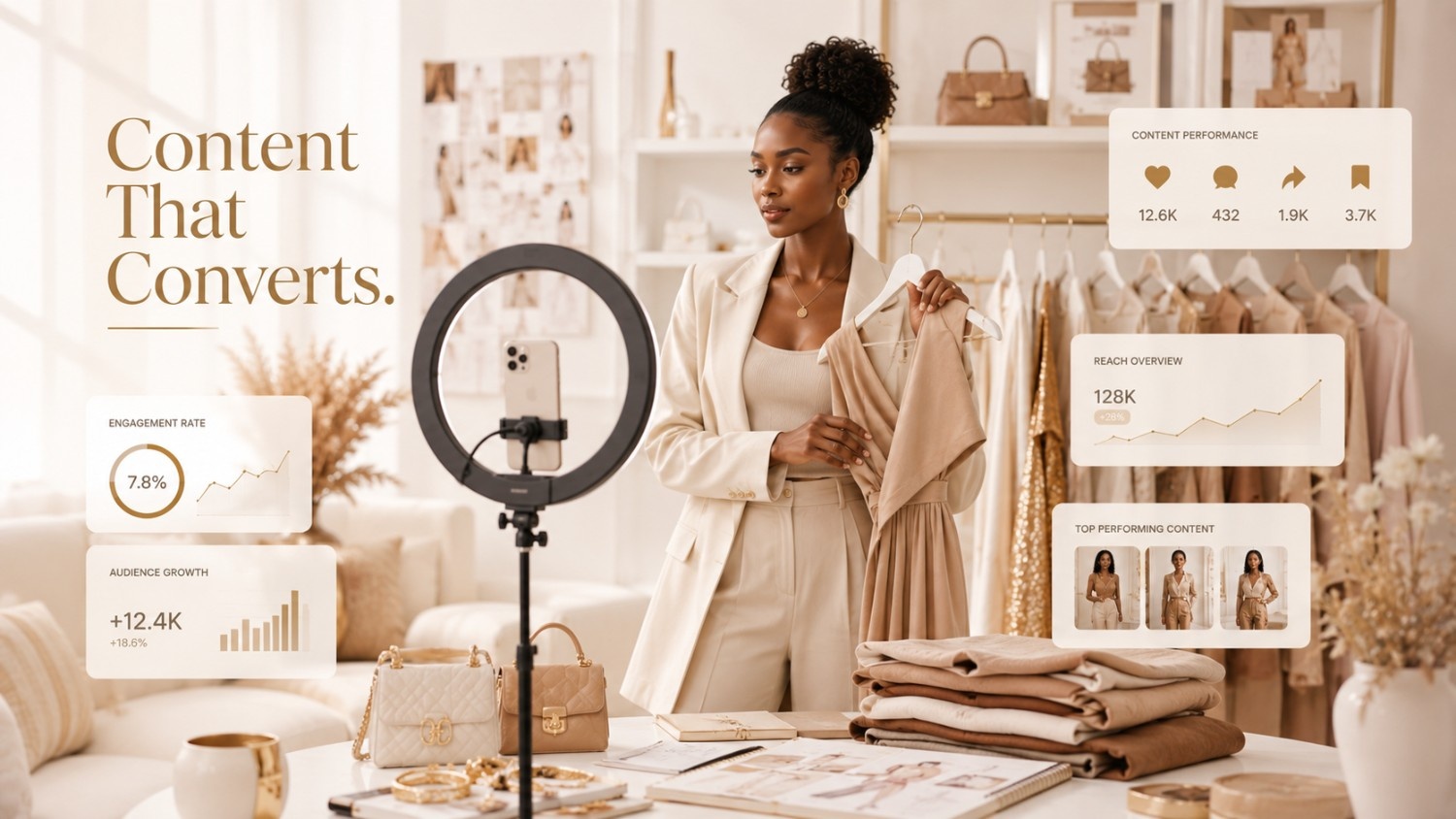
Nano Influencers (1,000 – 10,000 followers)
These creators have small but intensely loyal audiences. Their engagement rates are typically the highest of any tier. For a fashion brand launching a new collection or trying to build authentic word-of-mouth, nano influencers offer excellent value – often in exchange for free product rather than cash payment.
Micro Influencers (10,000 – 100,000 followers)
This is the sweet spot for most fashion businesses using influencer marketing. Micro influencers have large enough audiences to drive meaningful traffic and sales, while still maintaining the personal connection and authenticity that makes their endorsements feel genuine.
Macro Influencers (100,000 – 1,000,000 followers)
These creators offer massive reach but significantly higher costs and lower engagement rates. A single macro influencer campaign can cost thousands of pounds. This tier makes sense once your brand has strong conversion infrastructure in place – a fast website, a solid sales funnel, and email follow-up automation.
Celebrity Mega Influencers (1,000,000+ followers)
Unless your brand is already well-established with significant revenue, celebrity partnerships are rarely the best first investment. The cost is prohibitive, the audience is broad rather than targeted, and the conversion rate is often disappointing compared to micro-level partnerships.
HOW TO FIND THE RIGHT INFLUENCERS FOR YOUR FASHION BRAND
Effective influencer marketing for fashion begins with finding creators whose audience genuinely overlaps with your ideal customers. Here is a practical framework:
Start With Your Customer Profile:
Before searching for influencers, be crystal clear about who your ideal customer is. Age range, location (key for UK-based African fashion businesses), income level, fashion preferences, cultural values, and the platforms they use most. Your ideal influencer is someone who that customer already follows and trusts.
Search Methods That Work:
- Use Instagram’s search function with relevant hashtags (#AfricanFashion, #AnkaraStyle, #BlackFashionUK, etc.)
- Search TikTok for fashion creators covering your niche
- Use free tools like Modash, Heepsy, or Instagram’s Creator Marketplace to filter by audience demographics
- Look at who your existing customers follow – they will often tag themselves in posts wearing your competitors or similar brands
Evaluate Before You Approach:
Once you have a shortlist, assess each creator on:
- Engagement rate (aim for above 2% on Instagram, above 4% on TikTok)
- Audience authenticity – fake follower accounts have inflated numbers and zero purchasing power
- Content quality and visual alignment with your brand aesthetic
- Previous brand partnerships – have they worked with fashion brands before? Did it look authentic?
- Audience demographics – use their media kit or ask directly for insights showing location and age breakdown
Need a strategic system to convert influencer traffic into paying customers? Explore DIL Funnel-It system
STRUCTURING INFLUENCER DEALS THAT DRIVE REAL RESULTS
One of the biggest mistakes in influencer marketing for fashion is treating it as a purely transactional exchange. The brands that get the best results from creators build relationships, not just transactions.
Types of Partnership Arrangements;
- Product gifting: Send product in exchange for an honest review or feature post. Best for nano and micro influencers with highly targeted audiences.
- Paid partnerships: Fixed fee for a defined number of posts, stories, or videos. Good for creators with proven track records of driving engagement and traffic.
- Affiliate/commission arrangements: The influencer receives a percentage of every sale they generate through a unique code or link. Aligns incentives and reduces upfront risk.
- Brand ambassador programmes: Longer-term relationships where the influencer represents your brand consistently over months. Creates deeper audience association and trust.
What to Include in a Brief;
Always provide a clear brief that covers:
- What the partnership involves; exact deliverables, posting schedule, and platform
- Key messages and brand values to communicate
- What they should NOT say or do (competitors, price points, off-brand language)
- Whether content rights are included; can you reuse their content in your paid ads?
- How and when payment or product delivery occurs
A good brief protects both parties and dramatically increases the quality of output you receive.
AFRICAN FASHION AND INFLUENCER MARKETING: SPECIFIC CONSIDERATIONS
Influencer marketing for fashion has particular nuances when your brand operates in the African diaspora or targets African-inspired fashion audiences.
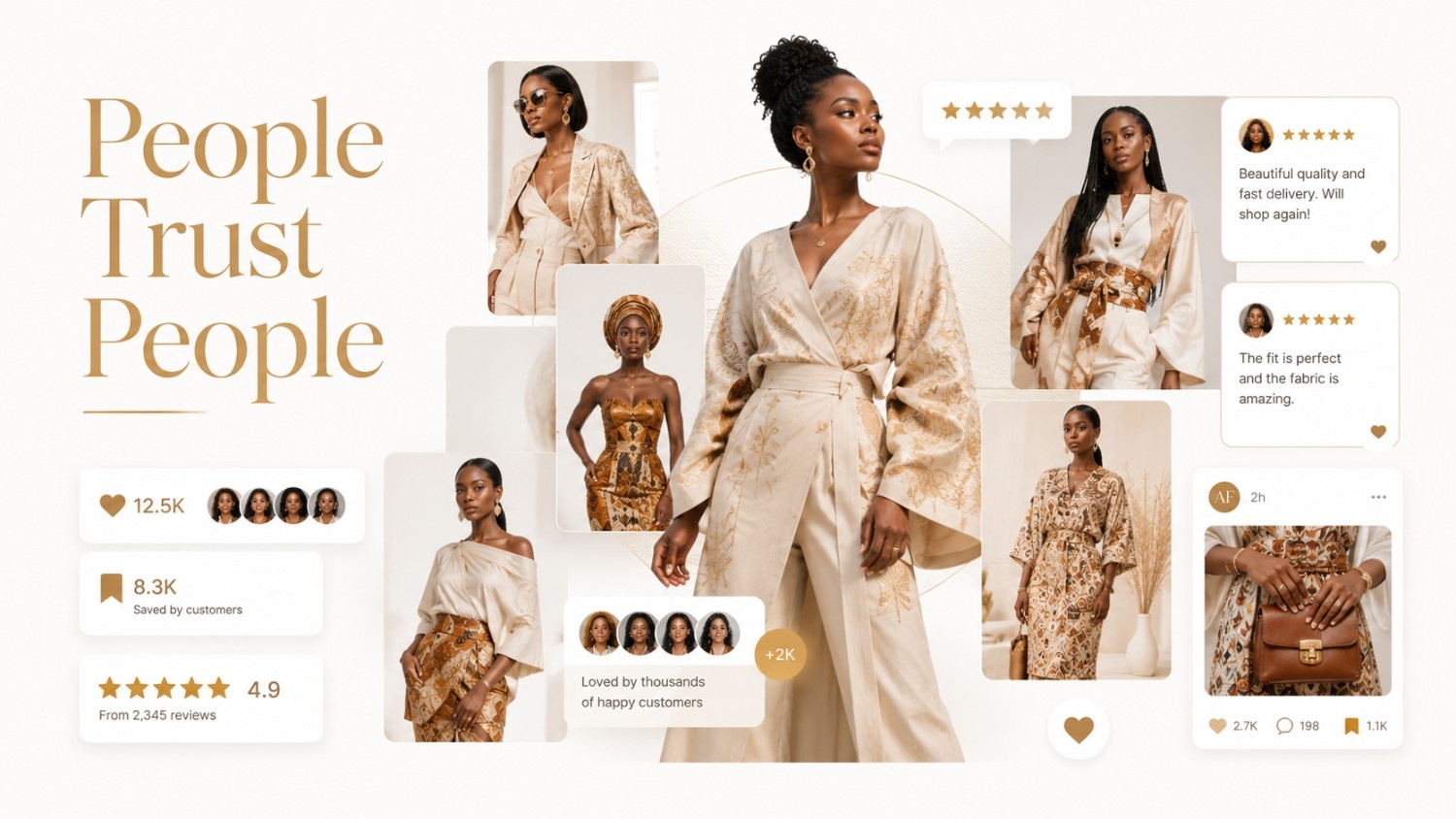
Authenticity Is Non-Negotiable:
African consumers, particularly in the UK diaspora market, are highly attuned to cultural authenticity. An influencer who clearly has no genuine connection to the culture or style you are representing will feel performative, and it can harm your brand rather than help it.
Prioritise creators who naturally engage with African culture, fashion, music, or lifestyle content as part of their everyday presence – not just when paid to do so.
Diaspora Micro-Communities Are Powerful:
Nigerian-British, Ghanaian-British, and broader Afro-Caribbean communities in the UK have tight-knit digital communities with high trust levels. A recommendation from a respected creator within these communities can generate disproportionate results compared to broader mainstream influencers.
Daniel Iloh Limited understands these dynamics intimately. Our growth strategies are built specifically around African business owners serving these communities, both locally and in diaspora markets.
TRACKING AND MEASURING YOUR INFLUENCER CAMPAIGN RESULTS
You cannot improve what you do not measure. Influencer marketing for fashion campaigns should be tracked rigorously from the outset.
Key Metrics to Monitor:
- Reach and impressions – how many people saw the content?
- Engagement rate – what percentage of viewers interacted (liked, commented, saved, shared)?
- Click-through rate – how many people clicked the link to your website or product page?
- Conversion rate – of those who clicked, how many made a purchase or enquiry?
- Revenue per campaign – what was the total revenue attributable to each creator partnership?
Tools for Tracking
Use unique discount codes or UTM-tracked URLs for each influencer so you can attribute sales accurately. Tools like Google Analytics, Facebook Pixel, and platform-native analytics help you track the full customer journey from influencer post to purchase.
TURNING INFLUENCER TRAFFIC INTO LONG-TERM CUSTOMERS
This is where many fashion brands miss a critical opportunity, and it is arguably the most expensive mistake in the entire influencer marketing process. Influencer marketing for fashion can drive a genuine spike in traffic, enquiries, and sales. But a spike without a system is just a moment. The excitement fades, the algorithm moves on, and three weeks later you are back to square one with nothing lasting to show for your investment.
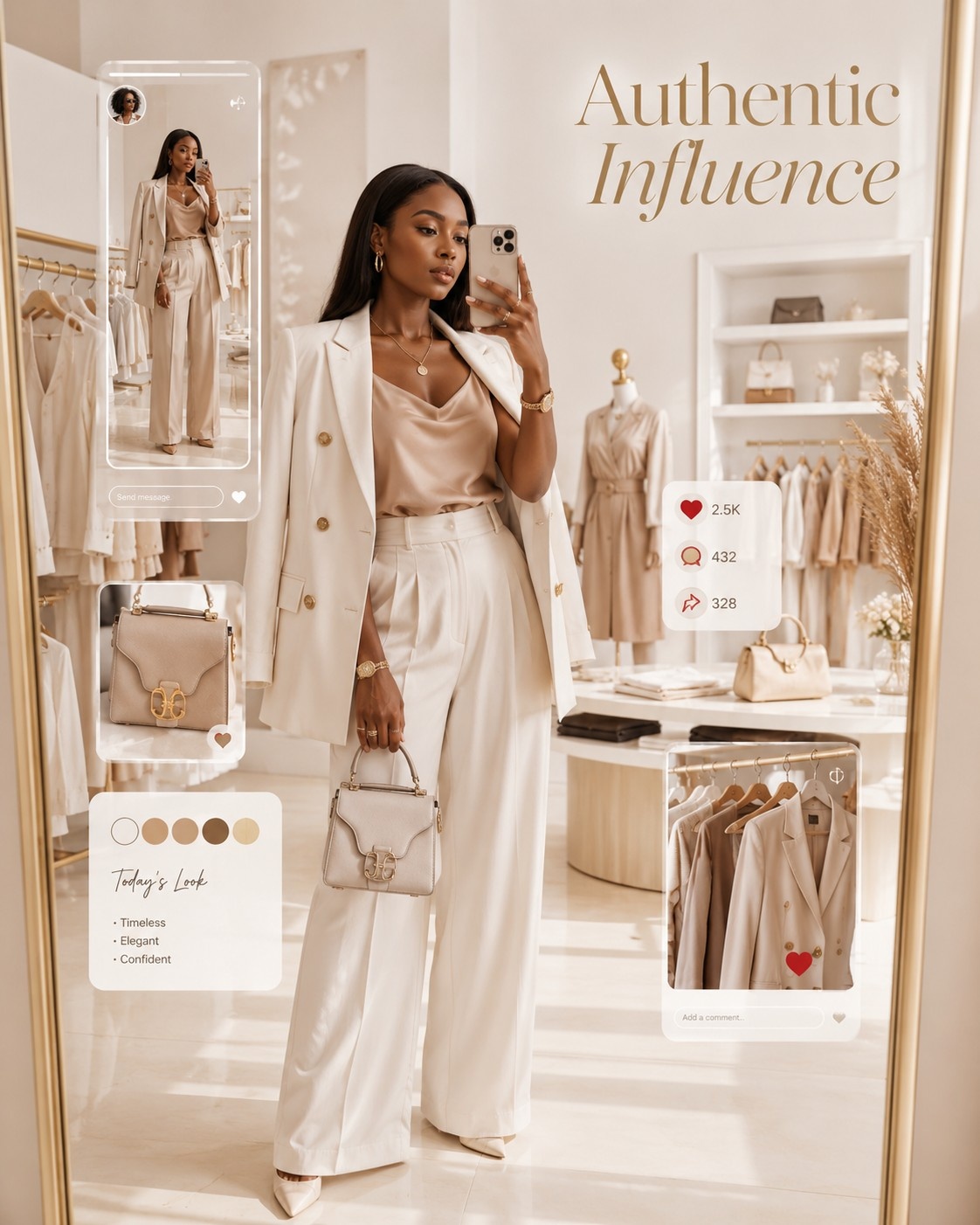
The brands that extract maximum value from influencer campaigns are the ones that treat every campaign as a lead generation event, not just a sales event. That mindset shift changes everything.
Every influencer campaign should feed directly into a structured capture and nurture system:
– Email capture mechanism: Have something ready on your website the moment traffic arrives. A discount code, exclusive early access to new arrivals, or a downloadable style guide ensures that visitors who are not ready to buy immediately still enter your world and stay within reach.
– Retargeting pixel: Install one before your campaign goes live. This allows you to serve intelligent follow-up ads to every single person who landed on your site, reminding them of what they saw and giving them a reason to return when the timing is right.
– Automated email welcome sequence: Have a sequence ready to receive new subscribers and walk them from curiosity to confidence to purchase, without you having to manually follow up with anyone.
Most fashion businesses spend all their energy getting people to the door and almost no energy thinking about what happens once they arrive. That gap is where revenue disappears.
Daniel Iloh Limited’s Email-It service is built precisely to close that gap, converting the interest and momentum generated by influencer campaigns into loyal, repeat-buying customers who come back collection after collection.
Convert your influencer traffic into buyers Set up DIL Email Automation and stop losing warm leads
BUILDING LONG-TERM INFLUENCER RELATIONSHIPS
The most valuable influencer partnerships are not one-off transactions, and the brands that treat them as such consistently leave their best results unrealised. A single sponsored post is a rental. A genuine long-term relationship is an asset that appreciates.
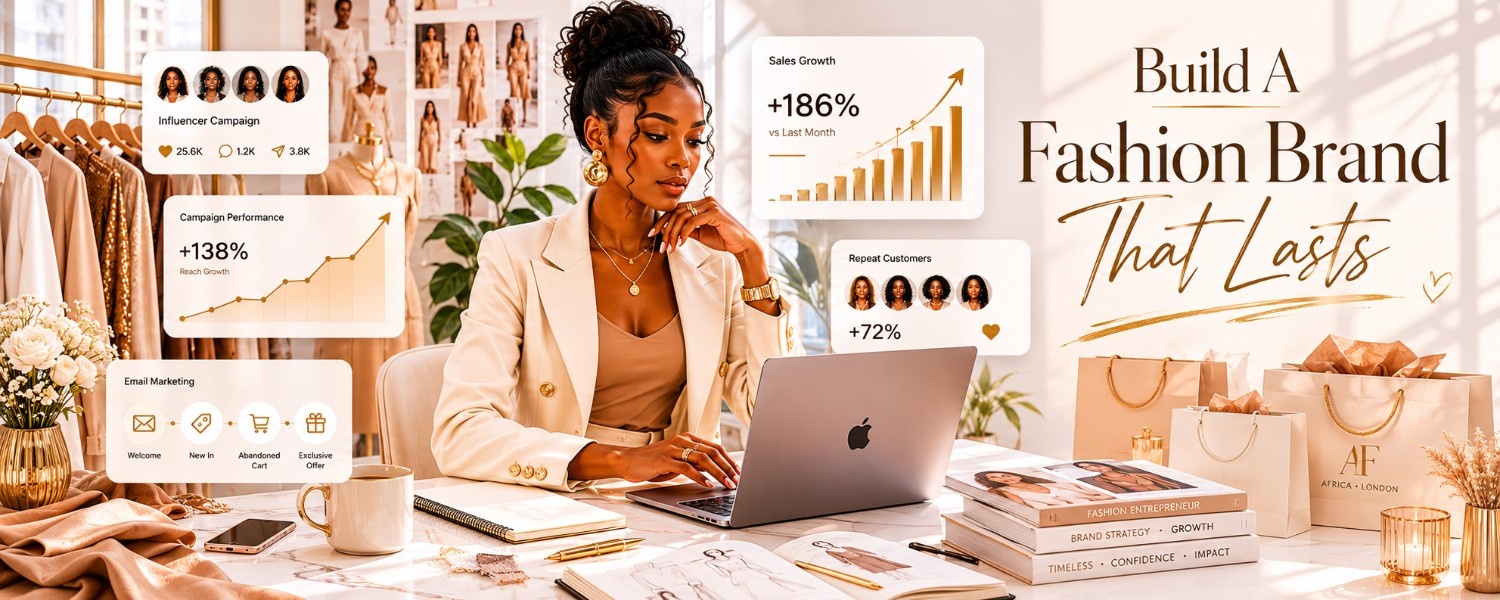
When a creator has worked with your brand multiple times, worn your pieces to their own events, and talked about you without being paid to, their followers have seen the relationship develop organically. That is a fundamentally different kind of endorsement, one that carries a weight no paid campaign brief can manufacture.
Building relationships like that requires real intentionality, here is all you need to practice;
– Pay on time and communicate clearly: Creators talk to each other. A reputation for clean, professional dealings opens doors that money alone cannot, and a reputation for the opposite closes them permanently.
– Give genuine creative freedom: Brief them on your brand values and key messages, then step back. Their audience follows them for their voice, and the moment that voice disappears, so does the trust.
– Share performance data: Treat creators as collaborators invested in the outcome. When they understand what resonated and what drove results, they bring better ideas to the next campaign.
– Offer category exclusivity: A commitment not to work with their direct competitors signals respect and seriousness. Most creators respond with a level of loyalty and enthusiasm that purely transactional arrangements never produce.
– Celebrate them beyond the campaign: Engage with their content genuinely, acknowledge their milestones, and make it clear you see the relationship as ongoing. Behind every follower count is a real person who notices whether a brand actually cares.
When an influencer genuinely loves your brand, their audience feels it in every frame, every caption, every casual mention. That authenticity cannot be scripted, cannot be bought, and cannot be faked. It has to be earned, one interaction at a time.
In conclusion, the most successful fashion brands using influencer marketing are not the ones that run one big campaign and hope for the best. They are the ones that build structured, repeatable systems – finding creators, running campaigns, tracking results, capturing leads, and retaining customers.
As an African fashion business owner, you have something powerful to offer: heritage, story, artistry, and authenticity that resonates deeply with audiences who are hungry for exactly what you create. Influencer marketing for fashion is one of the most effective ways to amplify that story.
Daniel Iloh Limited is here to help you build the growth infrastructure that turns one-time campaign spikes into sustained, scalable growth.
Book your free consultation: Schedule a session with Daniel Iloh Limited and start building your influencer strategy
Ready to build an influencer marketing system that actually converts? Let Daniel Iloh Limited design your customer acquisition strategy! Book a free strategy session today